
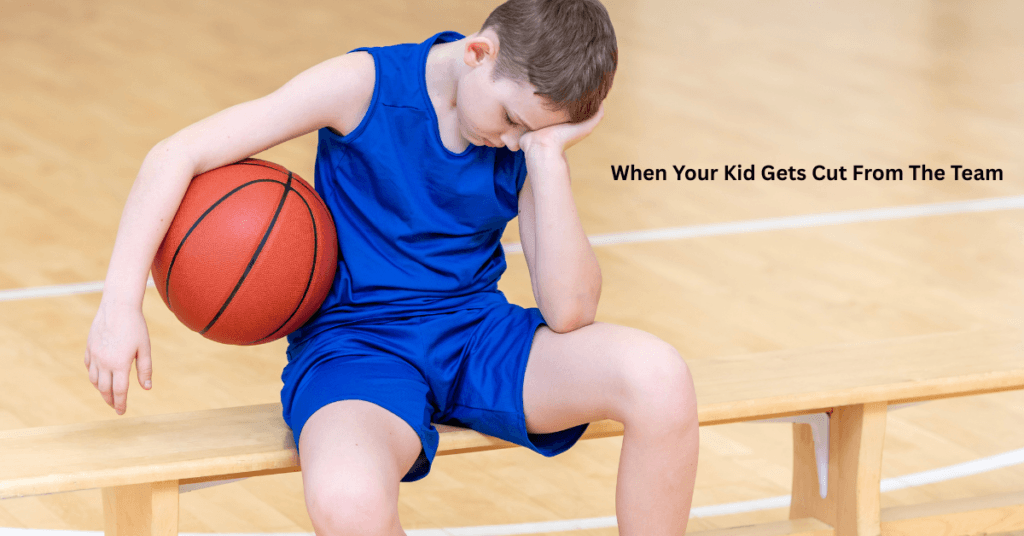
When Your Kid Doesn’t Make the Basketball Team
By Stephanie Rudnick, Founder of Elite Camps
The list went up Tuesday night. Your kid refreshed the page four times, just to be sure. Their name was not on it.
If your child didn’t make the basketball team this fall, you are probably taking it harder than they are. That is normal. Every September in the GTA, thousands of kids try out for rep teams, school teams, and academy programs, and most of them hear no.
Elite Camps turns 27 this month. I have stood in a lot of gym parking lots since 1999, and I have watched this exact night play out in North York, Richmond Hill, and Thornhill. I have also been the mom in the front seat with nothing good to say.
Here is what actually matters after the list goes up, and what most parents get wrong in the first 48 hours.
The First 48 Hours Matter More Than the Tryout Did
Do not email the coach that night. I know you want to. Put the phone down.
The first thing your kid is going to do is watch your face. If you look devastated, you just told them this was a disaster. If you get angry at the coach, you just told them the system is rigged and nothing they do matters. Both of those messages stick for years.
Say less than you think you should. “That’s a tough one. I’m sorry.” Then be quiet and let them talk.
Most kids do not want analysis on day one. They want to be sad in the car without it becoming a family meeting. Give them 24 hours before anyone says the word “next.”
And when you do talk about next, ask instead of tell. “What do you want to do about it?” gets you a lot further than “Here’s what we’re going to do.”
Why Most Kids Don’t Make the Basketball Team (It Isn’t Talent)
This is the part parents almost never believe, and it is the part that helps the most.
A coach running an Ontario Basketball rep tryout might see 60 kids across two 90-minute sessions. That is roughly three minutes of real observation per athlete. They are filling 12 spots, and they usually need a specific shape of roster: a second point guard, a kid who can rebound, a body for the post.
Your kid can be the seventh best player in the gym and still not make it, because five of the six ahead of them play the same position.
Add in birth year cutoffs. A kid born in December is competing against kids born in January of the same year, who have had eleven extra months of growth and coordination. That gap is enormous at ages 9 through 13 and it closes on its own.
So before you let your child decide they are “not a basketball kid,” get the actual reason. Email the coach a week later, keep it to one question, and ask what specific skill they want to see developed by next season. Good coaches will tell you. That answer becomes your training plan.
A No Is Not the End of the Story. It Is the Backbone of It.
I have three sons. All three played at a university or prep level. Not one of them got there on a straight line.
There were benchings. There were seasons where the minutes were not there. Those were the years they actually got better, because a kid who is comfortable is a kid who is coasting.
Failure is not a detour from development. It is the curriculum.
The kid who makes every team on the first try often learns nothing about how to respond when something goes wrong. The kid who gets a no in September and walks into a gym in October anyway is building something that does not show up in any box score.
I have watched this for 27 years. The athletes who go the furthest are almost never the ones who were the best at age 11. They are the ones who kept showing up after the years that stung.
Your job right now is not to protect your child from this feeling. It is to make sure they are not alone in it.
Your Kid Needs to Be in a Gym Within Two Weeks
This is the single most important decision you will make this month.
When a kid gets cut and then sits out the fall, the no becomes their identity. When a kid gets cut and is back on a court within two weeks, it becomes a season they trained through.
The gym you pick matters. Your child needs a place with no history attached to it. No teammates who watched them get cut, no coach who already decided what they are, no pecking order from last year. A clean slate.
That is exactly what our weekly lessons are built for. Ten-week sessions, grouped by age and skill, an hour and a half of warm up, skills, and scrimmage. Kids get hundreds of touches in a session instead of the twenty they might get in a rep game.
If your child misses playing on a team, D-League is our house league. They get assigned to a team, coached by our paid staff, and they play games every week. Nobody gets cut from D-League. That is the point.
If the coach named one specific weakness, semi-private training with a maximum of four athletes per coach is the fastest way to fix it before spring.
Ask the Five-Year Question
Here is the question I wish every parent asked the night the list goes up.
Not “how do we get on a team next year.” Ask: what do I want this kid to look like as a player at 16?
Rep basketball is game management. It is schedules, travel, and 30 minutes of court time split between 12 players. It is a wonderful experience and it is not, on its own, skill development.
Deliberate training is where a shot gets rebuilt and a weak hand gets fixed. It takes a year. It does not fit neatly into a season where you are trying to win on Saturday.
So a fall without a rep team is not a lost year. Handled right, it is the only uninterrupted development window your kid is going to get.
Some of the strongest athletes to come through Elite Camps did not make a competitive team at 11 or 12. They trained through it and walked into tryouts the following year as a completely different player. That is not a consolation story. That is the most common story.
The Takeaway
Your child got a no. It stings, and pretending it does not will not help them.
But a cut is information, not a verdict. Find out the real reason, get them into a gym inside of two weeks, and put the next twelve months into skill instead of scheduling. Kids do not quit basketball because of the hard days. They quit because of how the hard days get handled.
Fall sessions are running now. Find the right fit for your athlete and get them back on the court: register for a fall program.
P.S. If tryouts are what you are already thinking about for next season, read Basketball Tryout Tips for Kids before you do anything else. Our fall sessions fill quickly, and the 10 to 13 age groups go first every year.

About the Author:
Stephanie Rudnick
Founder of Elite Camps & Author of the Lil Baller Book Series
Stephanie Rudnick is the founder of Elite Camps, one of Canada’s largest basketball organizations, and the author of the beloved Lil Baller book series & Life is a Sport. With over 25 years of experience, Stephanie has dedicated her life to teaching kids the skills and values they need to thrive both on and off the court, while also serving as a trusted resource for parents navigating the ups and downs of youth sports.
A former University basketball player, Stephanie has transformed her own experiences as an athlete and parent into actionable advice for families. Her books, camps, and speaking engagements focus on fostering resilience, confidence, and joy in young athletes while empowering parents to guide their children through the challenges of sports with confidence and positivity.
Stephanie’s mission is to create a supportive community where kids and parents alike feel equipped to embrace the lessons sports can offer—both in the game and in life.