
The Comparison Trap in Youth Basketball
You’re sitting in the bleachers. The kid two spots down from yours just drained three in a row. Yours missed the rim twice and is staring at his shoes. You feel it in your stomach before you even decide to feel it: the comparison trap.
Every basketball parent falls into the comparison trap in youth basketball at some point. I did it with all three of my boys. But comparing your kid to a teammate is the fastest way to kill their confidence and slow down real growth on the court. This post covers why the comparison trap happens, why it’s lying to you, and what actually builds a kid’s game instead.
The Comparison Trap Is Real, and It’s Costing Your Kid
Youth sports puts your kid’s ability on display constantly. Coaches, teammates, and other parents all see it. Your kid sees it too, probably more than you realize.
National research on youth sports backs this up. Studies on sport parenting have found that roughly a quarter of kids judge their own performance by watching how their teammates are doing instead of focusing on their own game. That habit becomes a confidence killer fast, and it starts younger than most parents think.
Here’s the part that surprises people: the comparison trap doesn’t just hurt the kid who’s behind. It hurts the kid who’s ahead too. Both stop playing for the game and start playing for the ranking.
Every Kid’s Basketball Skill Development Runs on a Different Clock
I’ve raised three basketball players. Jeremy, my middle, was a late bloomer who didn’t hit his stride until grade 11. Ryan grew into his game earlier, and Nathan has been wired differently than both of his brothers since he could dribble. Same house, same gym time, three completely different timelines.
Ages 7 to 13 are what I call the golden window for motor skill development. Coordination, footwork, hand-eye timing, it’s all still forming. But it doesn’t form on a schedule, and a kid who looks a step behind at 9 can be the most skilled player on the floor at 12. I’ve watched it happen more times than I can count, in my own family and in twenty-five years of running camps.
When you compare your kid’s week 3 to another kid’s week 30, you’re not getting useful information. You’re just falling for the comparison trap and borrowing stress you don’t need.
What Actually Builds Skill: Reps, Not Rankings
Here’s the thing nobody tells parents at tryouts. Confidence on the court isn’t a personality trait. It’s built through repetition, plain and simple.
Kids who get focused, consistent reps show noticeable improvement in ball handling and footwork within two to three weeks. Shooting takes longer, usually four to six weeks, because you’re rebuilding muscle memory, not just adding effort. That’s true for every kid, fast developer or slow.
This is where a lot of rep teams and house leagues fall short. Practice time gets split twenty ways. Your kid might touch the ball twenty times in an hour. That’s not a knock on the coaches, it’s just math.
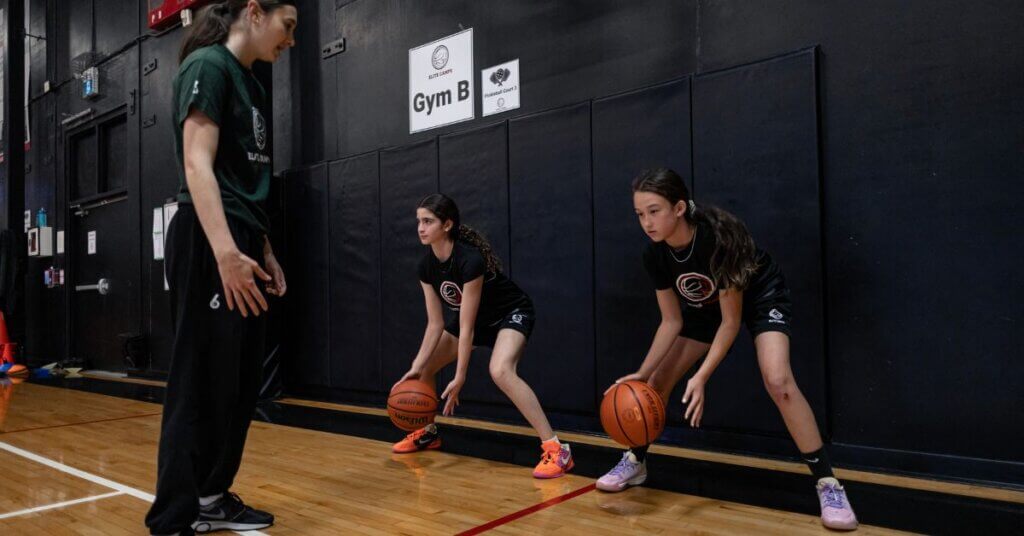
At Elite, we built our camps around the opposite math. Small groups, skill stations, and enough repetition that kids leave having touched the ball hundreds of times in a single session. You can’t shortcut those reps. The kids who put in the work in the gym are the ones who trust themselves in the game, not because they’re more talented, but because they’ve done it enough times that their body stops thinking and starts reacting.
That’s basketball skill development in one sentence: more quality touches, not more comparison.
How to Break the Comparison Trap as a Parent
This one’s on us, not the kids. Here’s what’s worked for me over three sons and a lot of car rides home.
Watch what you say on the ride home. The first ten minutes after a game or practice set the emotional tone for everything that follows. If the first thing out of your mouth is “did you see how well so-and-so played,” you’ve just told your kid the game is a competition against a teammate instead of a chance to grow. Ask what felt good instead. Ask what they want to work on. That’s it.
Track effort, not rank. Instead of asking where your kid stacks up against the team, ask how many reps they got in this week. Did they work on their weak hand? Did they try the move that didn’t work last time? That’s the stuff you can actually build on.
Let the struggle happen. The missed shot and the turnover are where the real development lives. Kids who never fail never grow, and kids who are constantly compared start avoiding the risks that lead to improvement. Let your kid miss. Let them get frustrated. That discomfort is doing more for their basketball skill development than a highlight reel ever will.
A Fresh Start Beats the Comparison Trap
If your kid has been carrying a label all season, whether it’s “the slow one” or “the one who doesn’t shoot,” a new gym and new coaches can matter more than another month of practice. Every new camp is a clean slate. No pecking order follows your kid through the door. That reset alone changes how kids show up and how hard they’re willing to try.
The Bottom Line
The comparison trap feels productive, but it isn’t. It measures the wrong thing at the wrong time. Real growth comes from reps, patience, and a kid who feels safe enough to fail in front of you. Stop watching the kid two spots down and start watching your own kid’s progress from last month to now.
If you’re ready to give your kid a clean slate and a camp built around real repetition, check out our weekly lessons. You can also read more on how practice confidence differs from game confidence and five ways basketball builds real confidence in our related posts.
P.S. If you catch yourself falling into the comparison trap this week, that’s normal. Just catch yourself before it comes out of your mouth on the ride home. Your kid is listening more than you think.

About the Author:
Stephanie Rudnick
Founder of Elite Camps & Author of the Lil Baller Book Series
Stephanie Rudnick is the founder of Elite Camps, one of Canada’s largest basketball organizations, and the author of the beloved Lil Baller book series & Life is a Sport. With over 25 years of experience, Stephanie has dedicated her life to teaching kids the skills and values they need to thrive both on and off the court, while also serving as a trusted resource for parents navigating the ups and downs of youth sports.
A former University basketball player, Stephanie has transformed her own experiences as an athlete and parent into actionable advice for families. Her books, camps, and speaking engagements focus on fostering resilience, confidence, and joy in young athletes while empowering parents to guide their children through the challenges of sports with confidence and positivity.
Stephanie’s mission is to create a supportive community where kids and parents alike feel equipped to embrace the lessons sports can offer—both in the game and in life.