
How to Keep Basketball Skills Sharp After Camp Ends
Camp week ends on a Friday. Your kid is dribbling through the kitchen, shooting into the laundry basket, talking about a crossover their coach taught them. By Wednesday, the ball is back in the closet and they are on the iPad.
I have watched this happen with my own three boys and with thousands of kids who have come through Elite Camps over the last 26 years. A week of camp gives your child a real jump in skill. What happens in the six weeks after determines whether that jump sticks or disappears.
This is the part nobody talks about at pickup on the last day. So let’s talk about how to keep basketball skills sharp after camp, without turning your whole summer into a training program.
The Post-Camp Drop-Off Is Real
Skill fades fast at this age. A ten-year-old who spent a week getting 300 touches a day on the ball can lose a chunk of that progress in two or three weeks of doing nothing.
This is not a knock on your kid. It is just how motor learning works for young athletes. New movement patterns, like a proper crossover or a clean shooting release, need to be repeated regularly or the brain stops prioritizing them. The Aspen Institute’s Project Play has been tracking this for years across youth sports, not just basketball: consistency beats intensity for kids under 13.
The good news: you do not need another week of camp to hold onto the gains. You need small, consistent touches.
Twenty Minutes Beats Zero
Here is the number I give parents who ask me this every August: twenty minutes a day. Not two hours. Not a formal workout. Twenty minutes, most days, in the driveway or the backyard.
That is enough to keep the ball handling patterns fresh and the shooting habits from disappearing. It is not enough to burn a kid out on a game they just spent a full week falling in love with again.
What Actually Fits Into a Driveway
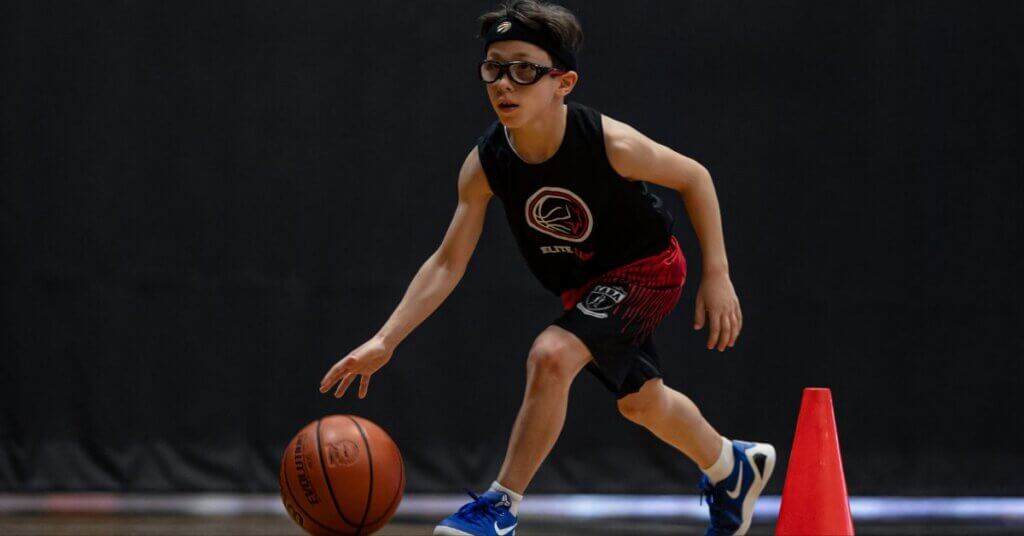
Stationary ball handling for five minutes. Both hands, low and controlled, not just the dominant hand they default to. Then five minutes of form shooting from close range, three or four feet from the hoop, focused only on elbow position and follow-through. Finish with ten minutes of just playing. One-on-one with a sibling, knockout with the neighborhood kids, anything that keeps the ball in their hands without you standing over them with a clipboard.
That last part matters more than parents think.
You do not need a schedule taped to the fridge. If your kid does this most days, four or five out of seven, that is a win. Missing a day because of a family barbecue or a rainy afternoon is not a setback. It only becomes a setback if a missed day turns into a missed month.
Let Them Struggle With It On Their Own
I know the instinct. You saw what the coach taught them, you want to help, you start correcting their form in the driveway. Resist that.
Kids need unsupervised reps where they are allowed to mess up without a parent watching and reacting. That is where real ownership of a skill develops. If every dribble gets a correction from you, basketball stops feeling like theirs and starts feeling like homework.
Let the failure happen. Let the ball roll into the neighbor’s yard. Let them try the move that does not work six times before it clicks on the seventh. That struggle is the actual curriculum, not a detour from it.
If they come inside frustrated because they could not land the move their coach showed them, do not fix it for them. Ask what they think went wrong. That question does more for their development than any correction you could offer.
You Do Not Need to Spend More Money on This
Parents ask me all the time if they need to buy a shooting trainer, sign up for private lessons, or find another program to fill the gap between camp weeks. Almost never.
A driveway hoop, an old ball, and twenty minutes works better than an expensive gadget your kid uses twice and forgets. I have seen families spend hundreds on training aids that end up in the garage next to the treadmill. Skip it.
The only thing worth spending on, if you want more structure, is time with a coach who actually corrects technique, not equipment that promises to do it for you. That is the whole idea behind our weekly programs: real coaching, spread out, at a fraction of the cost of a private trainer.
This Is About Next Season, Not Next Week
Parents get anxious about the six weeks between camp sessions like it is a make-or-break window. It is not. What matters is the five-year athlete, not the five weeks of August.
A kid who plays casually, keeps a ball in their hands most days, and comes back for another camp week or a fall program in September is building a much stronger foundation than a kid who trains hard for one week and then does nothing until next summer.
If you want more structure without another full week away, our weekly basketball lessons run right through the fall. It is the same high-repetition coaching philosophy as our camps, just spread across the season instead of packed into five days. For kids who are already performing well in games but plateauing on individual skill, our Elite Advanced Basketball Academy is built specifically to close that gap.
And if your kid is counting down to their next week of camp, we get it. Check the remaining day camp dates before spots fill up. If you want more at-home drill ideas before the next session, our post on basketball drills to practice before camp covers the same fundamentals from a different angle.
Some kids just do not thrive on a driveway and a self-directed plan. They need a coach watching, a group of other kids around them, and a schedule that is not up to them to follow. If that is your kid, there is nothing wrong with that. It just means they need the structure of another camp or lesson instead of the honor system. Take a look at everything Elite Camps has to offer and find the program that fits how your kid actually operates.
How to Keep Basketball Skills Sharp After Camp: The Bottom Line
You do not need to turn your summer into a training camp to protect the progress your kid made last week. You need twenty minutes a day, a driveway, and the discipline to let them figure some of it out without you.
The kids who keep loving this game long term are not the ones who trained the hardest for one week in July. They are the ones who never really put the ball down.
Check out our weekly basketball programs to keep that momentum going all summer, or browse our remaining camp weeks to lock in the next jump in skill.
P.S. If the ball ends up back in the closet by next weekend, do not panic. Just put it back in their hands. Twenty minutes tomorrow is still twenty minutes.

About the Author:
Stephanie Rudnick
Founder of Elite Camps & Author of the Lil Baller Book Series
Stephanie Rudnick is the founder of Elite Camps, one of Canada’s largest basketball organizations, and the author of the beloved Lil Baller book series & Life is a Sport. With over 25 years of experience, Stephanie has dedicated her life to teaching kids the skills and values they need to thrive both on and off the court, while also serving as a trusted resource for parents navigating the ups and downs of youth sports.
A former University basketball player, Stephanie has transformed her own experiences as an athlete and parent into actionable advice for families. Her books, camps, and speaking engagements focus on fostering resilience, confidence, and joy in young athletes while empowering parents to guide their children through the challenges of sports with confidence and positivity.
Stephanie’s mission is to create a supportive community where kids and parents alike feel equipped to embrace the lessons sports can offer—both in the game and in life.