Is a Rep Team or Basketball Camp Better for Your Kid?
The rep team vs basketball camp question. Every GTA parent ends up asking it eventually.
Your kid has a solid game, someone leans over in the stands and says, “Have you looked into rep? They’d be great.” And just like that, you’re googling tryout dates at 11pm.
I get it. I’ve been that parent. I’ve also been the basketball mom watching her son sit the bench on a rep team at 11 years old, wondering if I made the right call. After raising three boys who all went on to play at the university or prep level, and spending 25+ years running basketball camps in the GTA, I’ve watched thousands of kids develop. The rep vs. camp question comes up every single season.
Here’s what I actually think.
What Rep Basketball Actually Gives Your Kid
Rep teams are not bad. Let’s start there.
A good rep program gives your kid competitive game experience, exposure to team systems, and the pressure of performing when it counts. Those things matter. The camaraderie of a team that travels together, wins together, and loses together is real and valuable.
But here’s what most parents don’t see from the stands: in a rep game, your kid might touch the ball 15 to 20 times. In a 40-minute game where multiple kids are rotating, actual player reps are low. Coaches are managing lineups and trying to win. The player who already has the skills plays more. The player still developing? Sits.
That’s not a criticism of rep coaches. It’s just the structure of the game. Ontario Basketball Association rep programs are built around competition, not individual development.
Add in the cost (rep fees in the GTA can run $2,500 or more per season), the tournament weekends, the early practices, and the emotional weight of tryouts, and you want to be sure it’s the right fit before you commit.
What a Basketball Camp Actually Gives Your Kid
Here’s where I’ll brag a little, but I’ll back it up.
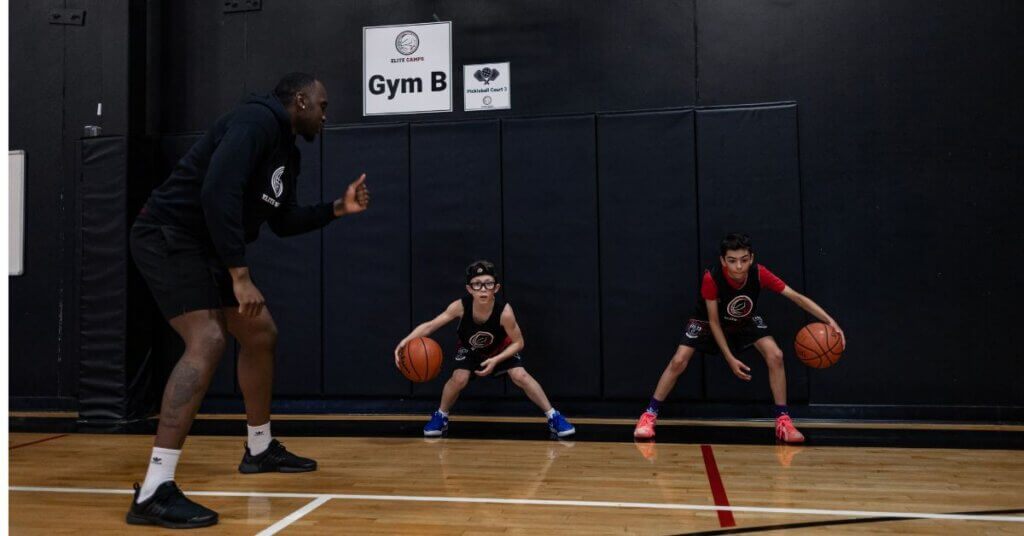
In a high-quality basketball camp, a player can get 300 or more focused skill repetitions in a single session. Not game reps. Skill reps: footwork, ball-handling, shooting mechanics, defensive positioning. The fundamentals that don’t get coached in a competitive game setting.
There’s also no hierarchy at camp. Every kid starts on equal footing. No one knows who made the A team last year. No one knows who the coach’s favourite is. Your kid gets to perform without the label they’ve been carrying all season on their house league team.
That clean slate matters more than parents realize. I’ve watched quiet, overlooked kids walk into a camp gym and leave with a completely different sense of themselves. It’s not magic. It’s what happens when you remove the social pressure and replace it with focused, intentional work.
Elite Camps is OCA Accredited and uses 100% trained, paid coaching staff. Not volunteer parents. Not older siblings filling in. Coaches who are there because they know how to teach the game to kids at every stage of development. You can see what our programs look like at elitecamps.com/youth-camp/.
The Development Gap Nobody Talks About
Here’s the honest truth that most people in the basketball world won’t say out loud.
Rep teams select for kids who are already good. That’s the point. But “already good” at age 10 or 12 often just means “early developer” or “been in the system the longest.” It doesn’t predict who will be the best player at 16.
I’ve seen kids cut from rep teams at 11 who were playing university basketball by 20. I’ve also seen rep stars plateau at 15 because they relied on athleticism instead of building real skills.
The Golden Window for motor skill development is roughly ages 7 to 13. If your kid spends those years in an environment that prioritizes winning games over developing the player, that window closes quietly. And you don’t get it back.
A basketball camp fills the development gap. It’s where the fundamentals get built. That work doesn’t show up in the box score, but it shows up three years later when your kid’s game suddenly looks completely different from everyone else’s on the floor.
That gap is also why Elite Camps runs year-round skill-development programs, not just summer sessions. Check out our D-League for weekly structured training that bridges competitive play and real skill-building throughout the year.
Rep Team vs Basketball Camp: My Real Answer
Both. At the right time, for the right kid.
For ages 7 to 12, I’d prioritize a skills-based program or camp over rep every time. Build the foundation first. The competitive structure will still be there when they’re ready, and they’ll be far better prepared to benefit from it.
For ages 13 and up, rep and camp can run alongside each other. Summer camp addresses the development gap that accumulates during a season of game-focused coaching. Year-round training through a dedicated program bridges the space between competitive play and skill-building.
And if your kid is on a rep team and you’re noticing they’re not actually getting better, just playing more games, that’s your sign. Games test what your kid already knows. Camps teach them what they don’t know yet.
The Bottom Line
So where does the rep team vs basketball camp debate actually land? Rep teams aren’t the enemy. But they’re also not a development plan on their own. They’re an opportunity to compete, and competition is most valuable when the skills are already there to support it.
Basketball camps build those skills. They create the reps your kid isn’t getting in games. They reset the social dynamic and let your kid start fresh, without the baggage of last season’s lineup decisions.
If you’re trying to figure out what’s next for your kid this summer, start with the gym. See what’s available at elitecamps.com/youth-camp/ and find the right program for where your kid is right now.
And if you want to see the full picture of what year-round development looks like at Elite Camps, visit elitecamps.com.
P.S. If your kid is between 7 and 12, there has never been a better time to invest in their fundamentals. The window is open. Don’t let rep tryout season be the thing that drives your development decisions.

About the Author:
Stephanie Rudnick
Founder of Elite Camps & Author of the Lil Baller Book Series
Stephanie Rudnick is the founder of Elite Camps, one of Canada’s largest basketball organizations, and the author of the beloved Lil Baller book series & Life is a Sport. With over 25 years of experience, Stephanie has dedicated her life to teaching kids the skills and values they need to thrive both on and off the court, while also serving as a trusted resource for parents navigating the ups and downs of youth sports.
A former University basketball player, Stephanie has transformed her own experiences as an athlete and parent into actionable advice for families. Her books, camps, and speaking engagements focus on fostering resilience, confidence, and joy in young athletes while empowering parents to guide their children through the challenges of sports with confidence and positivity.
Stephanie’s mission is to create a supportive community where kids and parents alike feel equipped to embrace the lessons sports can offer—both in the game and in life.